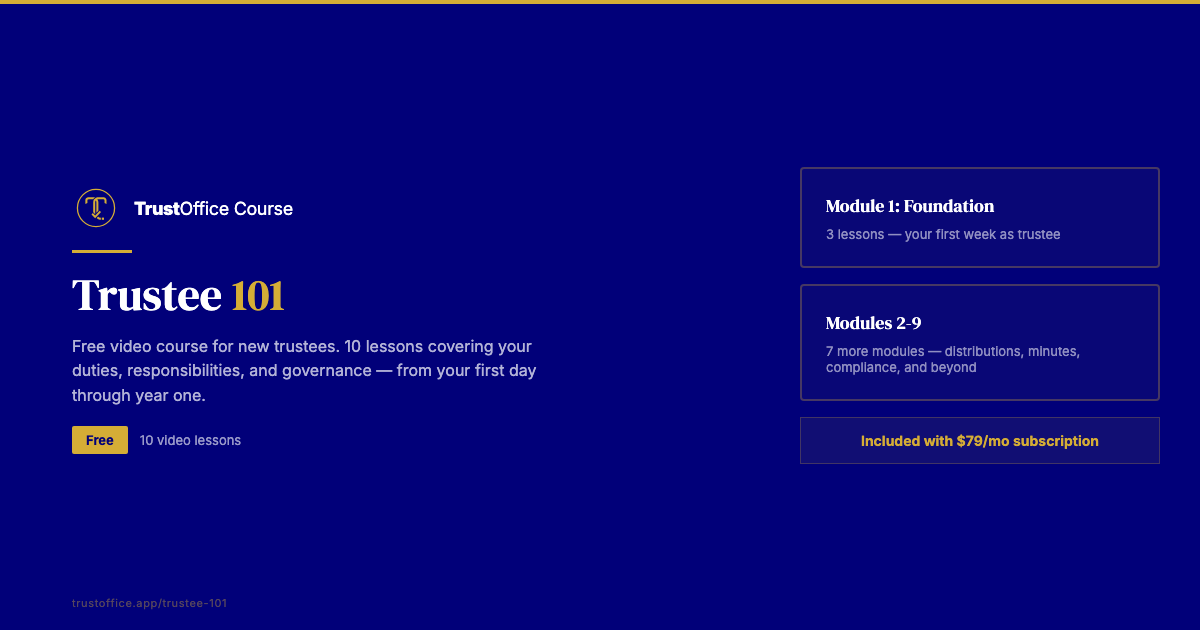
Enroll in a Free Trustee Course to Improve Your Skills Today
Enrolling in a complimentary trustee program can greatly enhance one's career competencies. It provides essential knowledge on trustee responsibilities and financial management. Participants can study at their own speed while connecting with industry professionals. This chance not only enriches understanding but also opens doors for professional growth. However, many may wonder what particular competencies they can expect to gain and how these can be applied in practical situations.
Core Strengths You'll Build From a Free Trustee Course
A free trustee course provides participants with essential skills crucial for sound management and oversight. The curriculum generally includes key topics such as financial literacy, enabling trustees to understand budgets, financial statements, and investment approaches. Participants also acquire understanding into legal responsibilities, ensuring compliance with regulations and moral principles.
Additionally, the course boosts strategic development competencies, arming participants to contribute in long-range organizational aims. Effective communication competencies are yet another significant component, permitting directors to convey thoughts in a clear manner and work with stakeholders productively.
In addition, collaborative and managerial skills are emphasized, fostering collaboration among board members and promoting a constructive decision-making process. Conflict resolution strategies are also covered, equipping participants to handle disagreements in a professional manner.
Ultimately, these qualifications not only prepare individuals for their positions as trustees but also elevate their overall organizational skills, making them valuable assets to any organization.
Primary Advantages to Join a Free Trustee Class for Job Progression
A significant proportion of specialists attempt to find ways to enhance their vocational paths, and taking a gratis trustee course offers unique strengths that can markedly enhance one's professional growth. First, these classes provide core expertise about fiduciary responsibilities, enhancing a professional's credibility in their sector. Acquiring the legal and ethical obligations of a trustee can establish new career opportunities and responsibilities.
Additionally, networking with industry professionals and peers during these courses can result in valuable connections that may enable career progression. Participants also develop practical abilities in financial management and governance, which are increasingly sought after in multiple fields. Finally, the flexibility of online formats allows individuals to learn at their own pace, making it easier to balance education with current work commitments. Overall, enrolling in a free trustee course not only enriches knowledge but can also significantly improve professional opportunities and career growth.
Uncovering the Superior Unpaid Trustee Program for You
How can one identify the most appropriate complimentary trustee program among the myriad of options accessible? First, individuals should assess their exact necessities and professional aspirations, determining what competencies or learning deficiencies they intend to cover. Next, studying copyright and framework is necessary; a well-defined copyright can indicate whether the course will fulfill personal goals.
Furthermore, assessing the credentials of the instructors can provide insight into the standard of education provided. Feedback and reviews from previous students are priceless, as they reflect actual results and experiences.
Finally, assessing the flexibility of the course format—whether it is self-directed or scheduled—can assist in selecting a program that suits one's complete guide lifestyle. By considering these elements, people can make a more educated choice, ensuring the chosen course matches their professional aspirations and learning preferences.
Effective Approaches for Getting the Most Out of Your Trustee Course
Maximizing the benefits of a trustee course requires a thoughtful approach. Participants should begin by establishing clear goals, identifying specific skills or knowledge they wish to acquire. Engaging fully in the learning process is essential; this includes participating in discussions, asking questions, and collaborating with peers. Regularly reviewing course materials helps reinforce understanding and retention of important concepts.
In addition, it is advantageous to take notes and create summaries of important topics, facilitating easier revision later. Connecting with fellow participants can provide valuable insights and assistance, fostering a community atmosphere. Utilizing additional materials, such as suggested texts or online forums, can improve understanding and implementation of learned skills.
Ultimately, employing the knowledge in practical scenarios, whether through simulations or hands-on experience, strengthens learning and enhances confidence in trustee roles. By pursuing these strategies, individuals can fully benefit from their trustee course experience for both personal and professional development.
Tangible Uses of Trustee Capabilities in Institutional Management
Trustee skills are vital in successful organizational oversight, enabling individuals to traverse intricate institutional environments. These competencies are critical for fostering openness, responsibility, and principled choices within different organizations, including nonprofits, educational institutions, and corporate boards. Trustees outfitted with strong analytical abilities can assess organizational results, financial health, and adherence to regulatory standards, thus improving comprehensive organizational leadership.
Moreover, effective interpersonal abilities allow trustees to engage with stakeholders, guaranteeing that multiple viewpoints are incorporated in decision-making processes. Dispute management abilities are equally important, as they support maintain harmony and collaboration among board members and other stakeholders. Additionally, forward-thinking planning abilities allow trustees to synchronize organizational goals with wider purposes, guaranteeing endurance and growth. In this way, the use of trustee skills in governance reinforces institutional frameworks but also cultivates trust and integrity within communities and organizations.
Common Questions That Are Posed Often
Do Free Fiduciary Courses Obtain Acknowledgment from Industry Bodies?
Complimentary trustee courses may not consistently be recognized by professional organizations. Recognition typically depends on the educational provider and the specific accrediting body, so participants should verify certifications before registering for any program.
What Duration Does a Common Free Trustee Course Need to Finish?
A standard free trustee program generally takes between four to eight weeks to complete. Course duration may differ depending on the supplier, content depth, and student engagement, permitting for adaptability in learning schedules.
Will I Be Awarded a Certification After Finishing a Free Trustee Course?
Yes, participants can typically receive a diploma after completing a free fiduciary program. However, certification availability may vary by provider, so people should confirm the particular requirements with the program provider before registering.
Are there Limits to How Much Fiduciary Courses I'm Able to Enroll In?
In most cases, there is no restriction on how many trustee courses you can enroll in. Individuals are advised to pursue several courses for strengthening their capabilities in trustee responsibilities and governance.
What Requirements Are Essential for Participating in a Free Trustee Course?
To join a gratis trustee course, participants typically require a basic familiarity of financial principles, pledge to the course duration, and sometimes former experience in fiduciary roles. Specific requirements may fluctuate by institution.